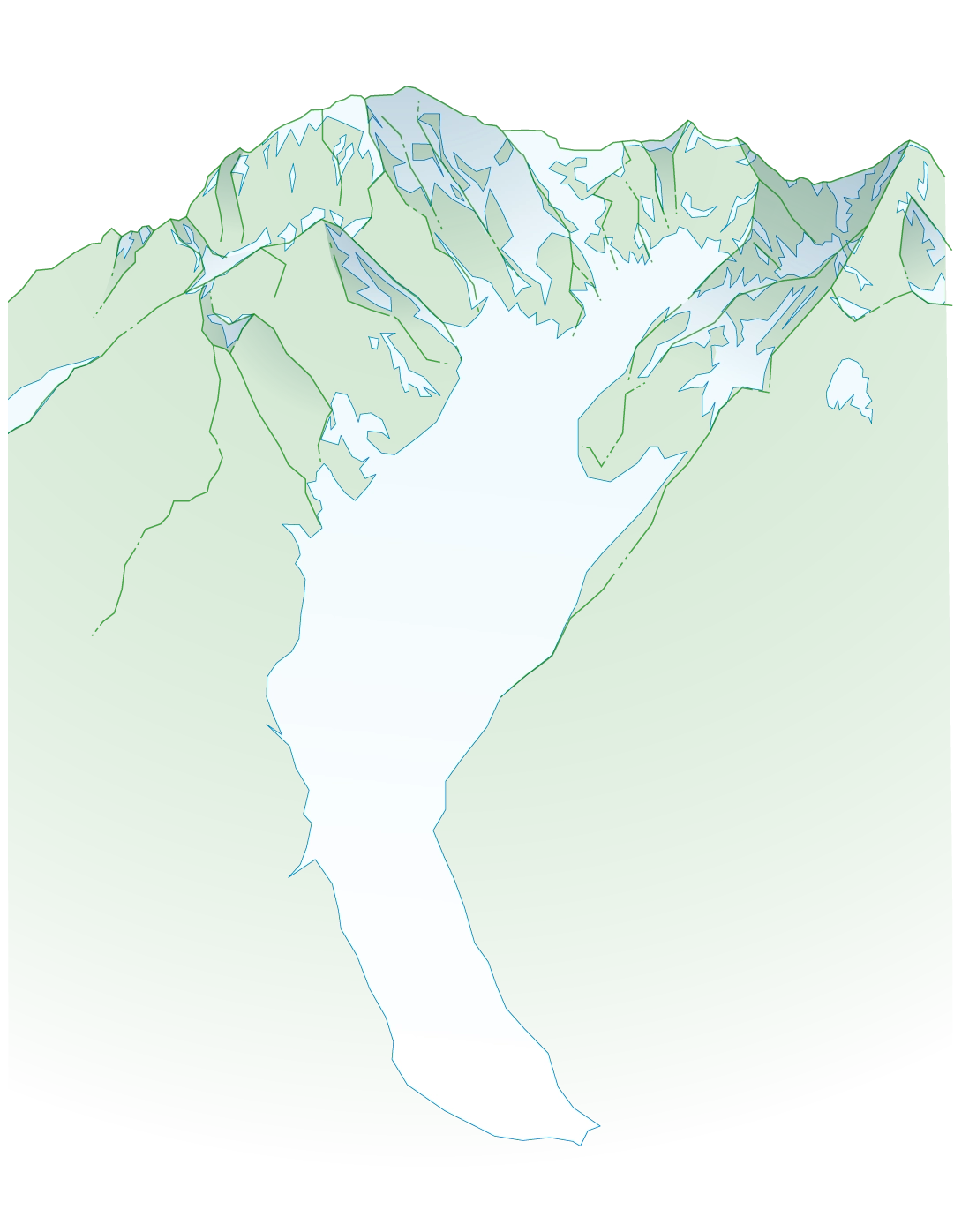
At the beginning of the twenty-first century, the Brenva Glacier was the Italian glacier reaching the lowest altitude: about 1,300 metres above sea level. This record depended on a very large accumulation basin and on a “glacier tongue” in the lower part, covered by landslide deposits that protected the ice from melting.

Stage 06
Fossil ice
Basin, tongue and front: how does a glacier work?
Stage 06“Fossil ice”Brenva Glacier Trek
0:000:00
A low-altitude glacier
At the beginning of the twenty-first century, the Brenva Glacier was the Italian glacier reaching the lowest altitude: about 1,300 metres above sea level. This record depended on a very large accumulation basin and on a “glacier tongue” in the lower part, covered by landslide deposits that protected the ice from melting.
Amputated tongue and fossil ice
In 2004, the connection between the accumulation zone and the glacier tongue was interrupted, a phenomenon known as “glacial amputation”. The tongue is no longer fed and becomes fossil ice destined to disappear. The glacier’s new “active” front, however, is subject to collapses that can be observed throughout the year. The collapsed ice creates persistent deposits that can be considered “regenerated glacier”.
How a glacier works
“High-altitude accumulation zone”: the area where the glacier mass is deposited. “Ablation zone”: the surface where loss of glacier mass occurs, through ice melt or collapses of ice sections. “Glacial flow”: the movement of ice from upstream to downstream, from the accumulation zone to the ablation zone, with a consequent transfer of mass.