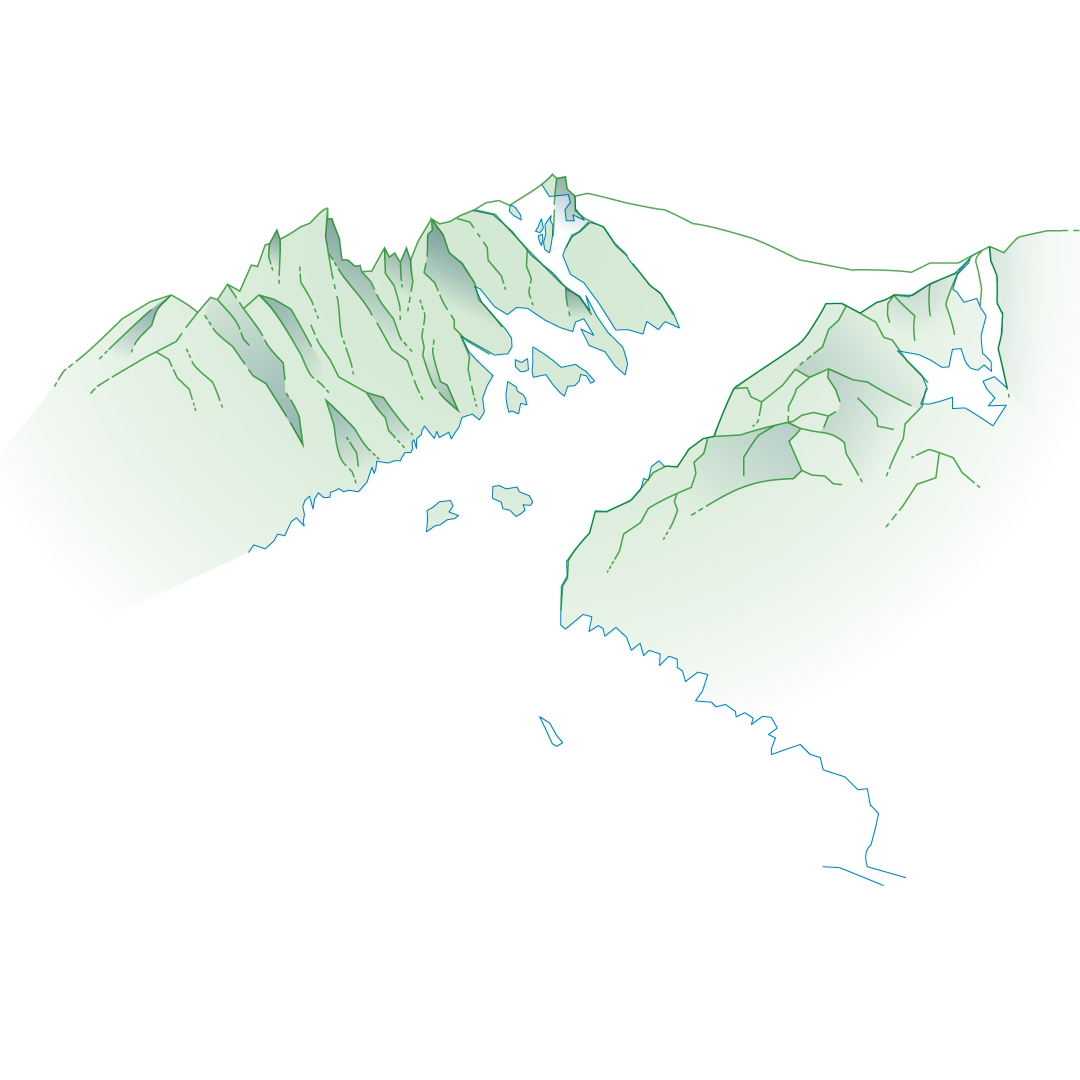
The dark, layered rocks we see here were originally ancient marine sediments, part of an ancient sea basin between the Eurasian and Adriatic plates. Transformed by heat and pressure over thousands of years, they became calcareous schists, now tilted almost vertically.

Stage 04
Geology of Mont Blanc
Marine sediments in the mountains, limestone rocks and the spires of the Aiguilles
Stage 04“Geology of Mont Blanc”Brenva Glacier Trek
0:000:00
A sea among the mountains
The dark, layered rocks we see here were originally ancient marine sediments, part of an ancient sea basin between the Eurasian and Adriatic plates. Transformed by heat and pressure over thousands of years, they became calcareous schists, now tilted almost vertically.
Collision between continents
During the Cenozoic, the African plate pushed against the Eurasian plate. Uplift forces deformed the Earth’s crust, fracturing and overlapping the rocks. The seabeds gradually emerged, and the geological structures that now characterize the Alps took shape.
The granitic face of Mont Blanc
Mont Blanc lies along the Penninic Front, a true geological divide where the rocks of the two plates collided. The massif’s pale granite, formed before the orogeny and then tilted into a sub-vertical position, emerges with its irregular edges exposed, which erosion has sculpted into the spectacular spires of the Aiguilles.